Chop a sample like it is 1994
Digging, filtering, swing, and why your drums sound flat next to the records you love.
Sampling is the technique this coast contributed to music permanently, and it is also the one most commonly done badly now — not because the tools got worse, but because the sources did. Start with where the audio comes from, because everything downstream inherits it.
Your source is the ceiling
A sample ripped from a compressed streaming video has already been through a lossy encoder that threw away high frequencies and smeared transients. Then you chop it, layer drums on it, compress the bus, and master it. Every one of those steps amplifies the damage. That is why your drums sound flat next to a record made thirty years ago on worse equipment — the equipment was not worse, the source was better.
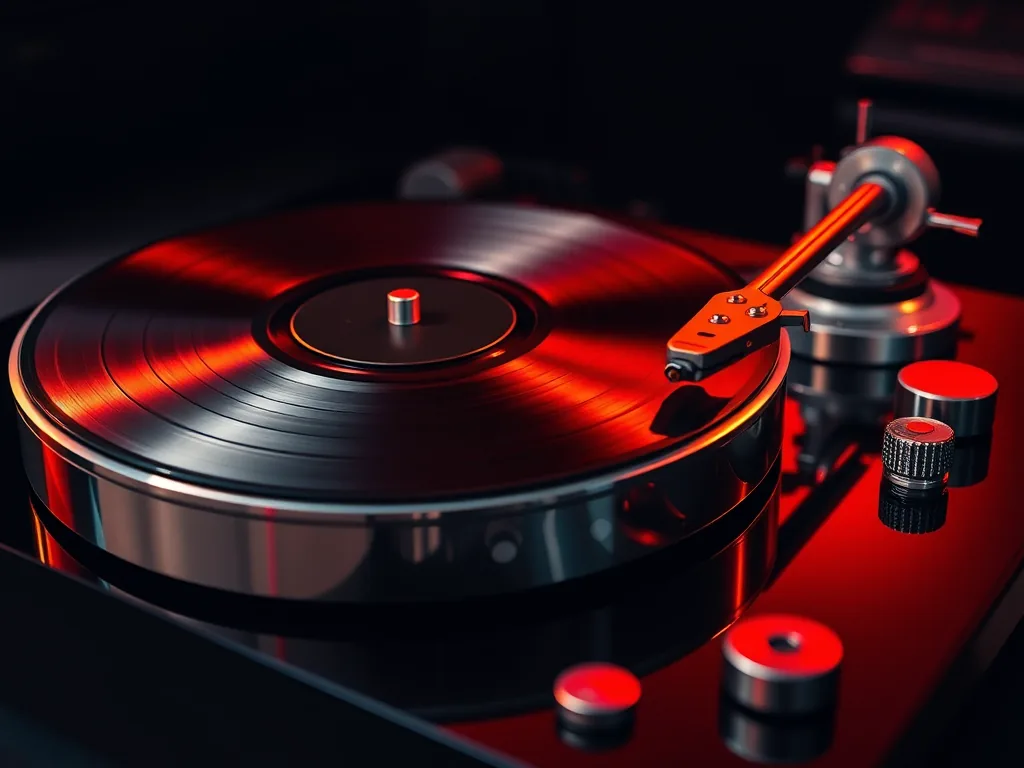
Vinyl, CD rips, and legitimate high-quality digital sources all give you transients that survive processing. This is the actual argument for a real turntable in a beat room, and it is not nostalgia.
The clearance conversation, up front
Sampling a copyrighted recording without permission is infringement, whether or not you chopped it beyond recognition, and “under a few seconds is fine” is not a real rule — it never was. For learning, for practice, for beats that live on your hard drive, nobody is coming for you. For anything you commercially release, you need clearance from both the master owner and the publisher, or you need a royalty-free source.
This is not us being squeamish. It is the single most common way a young artist’s first successful record turns into a bill. Decide which category a beat is in before you build a release around it.
Practical middle path: learn the craft on records you love, release on cleared or royalty-free sources, and re-flip your own best chops with played parts once you know what the loop is doing.
Finding the loop
You are listening for two bars where something changes — a horn stab, a chord turnaround, a vocal fragment — not for the most beautiful passage. Beauty loops badly. Movement loops well.
- Intros and outros are where the drums are often absent, which gives you a clean melodic source.
- A low-pass filter to isolate the bassline is the oldest trick on this coast and still works.
- Pitch the loop to fit your drums rather than fighting the tempo — small pitch shifts also change the character in useful ways.
- If the loop only works with the original drums under it, you have not found a sample, you have found a song.
Chopping versus looping
Looping is playing two bars back. Chopping is cutting those bars into pieces and replaying them in a new order, which is what turns a borrowed passage into your arrangement. Chop on transients, assign to pads, and play it in by hand rather than drawing it in — the small timing inconsistencies of a played performance are most of what people mean by “feel”.
Swing, and why quantizing kills it
Swing delays every second sixteenth note by a percentage. That delay is the entire difference between a pattern that nods and a pattern that marches. The classic hardware swing values people chase are in the mid-fifty percent range, and the reason those machines are still sought after is that their timing was slightly inconsistent in a musically useful way.
If you quantize everything to a hard grid, you remove exactly the thing you were trying to capture. Quantize the kick and snare if you must. Leave the hats, the chops, and anything played by hand alone.
The drums underneath
A sample sitting on top of drums that occupy the same frequency range will always sound flat. High-pass the loop so the kick has room underneath it, and check whether the loop already contains a snare — if it does, either use it or filter it, but do not stack a second one on top of it and wonder why the mix is crowded.
Good source, played by hand, drums with room underneath. That is the whole method, and it has not changed since the machines that invented it.
The gear
for this job.
A real deck is here for the source-quality reason above, not for the aesthetic. The samplers are here because playing chops in by hand is what produces swing.
 LEVEL UP$$$
AT-LP140XP
High-torque direct drive for digging, sampling, and actually learning to cut.
Sampling off YouTube rips is why your drums sound like a phone call.
Check price → LEVEL UP$$$
SP-404 MKII
The grit box. Vinyl sim, cassette sim, and a compressor that makes clean sources sound found.
If your beats sound too polished for the verse, this is the fix.
Check price →LEVEL UP$$$MPC One+
Direct descendant of the machine that built the boom bap era, minus the floppy disks.
Standalone means beats happen on the train, not only at the desk.
Check price →LEVEL UP$$$Two-Channel Battle Mixer
Sharp crossfader, real curve control, and the cut lag that decides whether a scratch lands.
The crossfader is the instrument. Do not cheap out on it.
Check price →Affiliate links — we may earn a commission at no extra cost to you. Nothing is listed in a guide that is not already in the catalog for a stated reason.